
Bloating, constipation, abdominal discomfort and reflux are frequently reported during perimenopause and menopause. If body-composition changes are also on your mind, see our evidence-based guide to menopause and weight gain. Hormonal change may be part of the picture, but food habits, stress, sleep, medication and digestive conditions can also contribute.
Start reading
Look for patterns before blaming one food
It is tempting to remove gluten, dairy, carbohydrates or several other foods at once. Broad restriction can make it harder to identify the real pattern and may reduce nutritional variety unnecessarily.
A short food-and-symptom diary can be more useful. Record meal timing, approximate portions, symptoms, bowel habits, stress, sleep and anything unusual. The aim is not to obsess over every bite; it is to notice repeatable relationships.
Four things worth tracking together
Food
What and when
Symptoms
Type and timing
Context
Stress and sleep
Pattern
What repeats
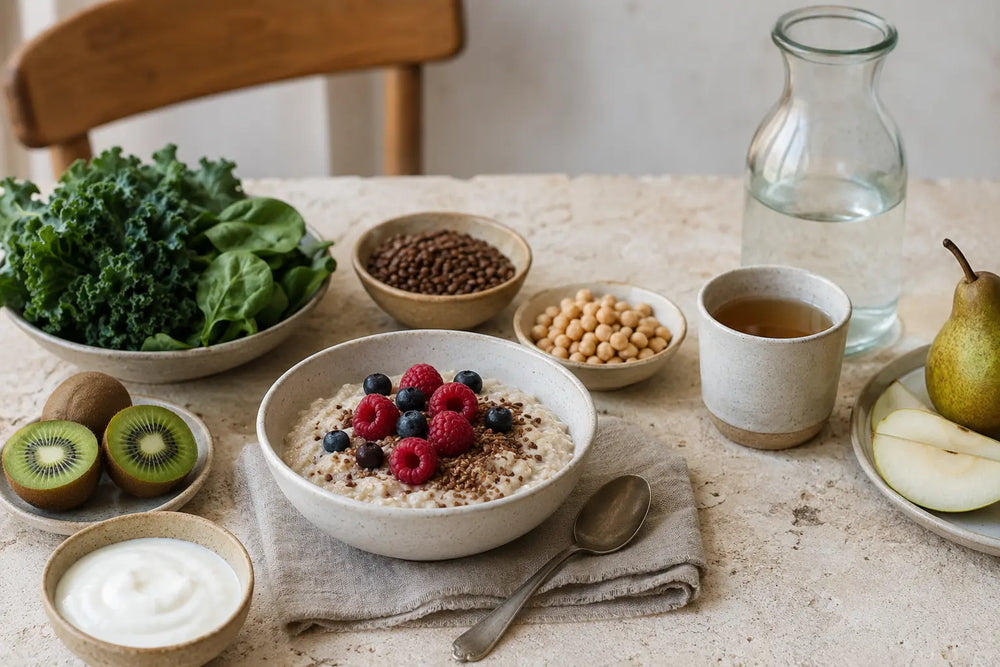
Habits that may support digestive comfort
- Increase fibre gradually Fruit, vegetables, oats, beans, lentils, wholegrains and seeds can support bowel regularity. A sudden large increase may temporarily worsen gas or bloating.
- Drink regularly Fibre works best alongside adequate fluid. Spread drinks across the day rather than trying to catch up all at once.
- Slow the meal down Eating quickly, talking while chewing, using straws and fizzy drinks can increase swallowed air for some people.
- Keep moving Regular gentle activity can support bowel habits, while movement also contributes to wider menopause health.
Fibre-rich foods and fluids can support digestive health, but increase fibre gradually if your intake has been low.
Foods and situations to observe—not automatically avoid
- Large, rich or high-fat meals
- Fizzy drinks and frequent chewing gum
- Large portions of beans or certain vegetables when fibre is increased suddenly
- Alcohol, caffeine or spicy foods if they coincide with symptoms
- Long gaps between meals followed by eating quickly
- Periods of poor sleep or high stress
If a particular food repeatedly causes symptoms, discuss it with an appropriate healthcare professional before removing a whole food group long term.
Persistent bloating deserves proper attention
Speak with a doctor if bloating is persistent, frequently returns, significantly affects your life or comes with ongoing pain, marked bowel changes, unexplained weight loss, blood in the stool, vomiting, a lump or swelling, or unusual fatigue.
Do not assume every digestive symptom is “just menopause”. Appropriate assessment can help rule out other causes.
Want help understanding your food and symptom patterns?
Your Nutrition Specialist can help you build a practical food plan and identify questions that may need medical follow-up.
Menopause and digestion FAQs
Can menopause cause bloating?
Digestive symptoms are commonly reported during the menopause transition, but bloating has many possible causes. Hormonal change may contribute without necessarily being the only explanation.
Should I try a low-FODMAP diet?
A low-FODMAP approach can be useful for some people with diagnosed or suspected IBS, but it is restrictive and is best undertaken with qualified professional guidance and a structured reintroduction phase.
Should I stop eating dairy or gluten?
Not unless there is a clear reason. Removing foods without appropriate assessment can make the diet unnecessarily restrictive and may obscure the real trigger.
Can stress affect digestion?
Yes. Stress and anxiety can influence gut symptoms and may trigger or worsen symptoms in conditions such as IBS. This does not mean symptoms are imaginary.